

Managing remote teams across borders is one thing; doing it successfully in Indonesia requires understanding a unique cultural, economic, and regulatory landscape.
As Southeast Asia’s largest economy—home to more than 270 million people, a young workforce, and accelerating digital adoption—Indonesia presents immense opportunity. Yet its work norms and communication styles differ markedly from Western models.
Indonesia’s labor landscape has evolved significantly over the past decade. Data from Indonesia’s statistical agencies and international institutions show a labor force exceeding 135 million workers, with services and digital sectors driving growth. Internet penetration surpassed 80% in 2025, accelerating the adoption of remote and hybrid work models.
However, the digital divide remains. Rural areas and outer islands lag in connectivity, with speeds and reliability that can hinder real-time collaboration. This infrastructure reality makes asynchronous communication and adaptable tools critical for remote teams in Indonesia.
For global companies expanding into Indonesia, remote work is not merely a logistical adjustment—it is a cultural integration challenge with strategic consequences.
In this article, we examine how Indonesian culture influences remote work dynamics, what global leaders must know about remote workforce engagement, and how to build performance, trust, and compliance into your operations with real insights grounded in data and research.
Culture Matters in Managing Remote Teams in Indonesia

Remote work is not only about tools and policies—it’s about people. Indonesia’s social fabric, rooted in collectivism and high-context communication (as defined by cross-cultural research from Hofstede Insights), shapes work interactions in ways that foreign leaders must understand.
Collectivism Over Individualism in Remote Teams
Indonesia scores high on collectivism, meaning group harmony, shared goals, and interpersonal cohesion often outweigh individual assertiveness. Remote workers may hesitate to express disagreement directly, especially in large meetings or in front of superiors. Silence or indirect responses often signal respect and consensus-seeking, not confusion or disengagement.
Global leaders unfamiliar with these norms sometimes misinterpret indirect communication as agreement or lack of feedback.
Rather than voicing disagreement in large forums, Indonesian professionals often express their views more comfortably in smaller group discussions, structured one-on-one check-ins, or through written follow-ups after meetings. These formats provide psychological space for reflection while preserving group harmony.
Respect for Hierarchy When Managing Remote Teams
Indonesian workplaces often reflect hierarchical structures where seniority and titles matter. Even in remote settings, decisions may flow from top to bottom, and junior staff may wait for explicit direction.
This preference reflects a community-oriented decision style that values structured guidance rather than confrontation.
Time Orientation and Flexibility for Remote Teams
Intercultural research describes Indonesian time orientation as relaxed and flexible. Schedules are seen as guidelines, not rigid commitments. Relationship needs (helping a colleague, handling a family matter) sometimes override strict adherence to timelines.
Results remain important, but are balanced with contextual realities—a “slow but sure” mindset. In remote setups, foreign managers need to be explicit about which deadlines are hard, which are flexible, and how slippage should be communicated. Clear time zone management and cut‑off times help prevent both over‑control and chronic delay.
Religion, Family, and Work Priorities
Research on cross‑cultural work ethics notes that for many Indonesian employees, religion and family take priority over work, especially compared with some East Asian or Western contexts. This shapes expectations around religious holidays, prayer times, and family obligations.
Remote work can actually make this easier to accommodate—but only if policies acknowledge it. Allowing flexible hours around major holidays, or avoiding key project milestones during national religious events, pays dividends in loyalty and engagement.
Also read: Pros and Cons of HR Outsourcing in Indonesia
Communication Styles and Their Impact on Managing Remote Teams

Remote teams depend on communication, but communication expectations differ across cultures.
High-Context Communication
Indonesians typically use high-context communication—meaning much of the message is inferred from tone, relationship dynamics, and social cues rather than stated explicitly. This contrasts with low-context cultures, such as the United States or parts of Europe, where communication tends to be direct, linear, and verbally explicit.
In practical terms, what is left unsaid can be just as important as what is articulated. Laughter, pauses, softened phrasing, or indirect wording often serve relational functions—preserving harmony and mutual respect rather than avoiding clarity. Direct criticism, especially in public settings, may be perceived as impolite or unnecessarily confrontational.
For remote managers, this requires a shift in approach. Instead of pushing for blunt responses, effective leaders cultivate empathetic listening, pay attention to contextual signals, and invite clarifying questions in ways that feel psychologically safe. In high-context environments, meaning is co-created—not simply delivered.
Language Considerations
English proficiency in Indonesia is uneven. Urban professionals often use English comfortably, but remote teams spanning provinces may have varying levels of fluency. Language barriers can affect collaboration, especially in technical or complex discussions.
Using clear, simple English, avoiding idioms, and validating understanding through summaries help bridge gaps.
Also read: Common Payroll Errors in Indonesia and How to Fix Them
Building Trust and Engagement Across Distance in Managing Remote Teams

Trust is the foundation of remote team performance. Cultural nuances influence how trust develops in Indonesia.
Frequent, Inclusive Check-Ins
Indonesian remote workers benefit from structured, frequent interactions rather than sporadic catch-ups. Regular team huddles, check-ins with leaders, and scheduled collaboration sessions help compensate for the lack of in-person cues.
Empirical research from regional HR studies shows that remote engagement correlates strongly with psychological safety—the belief that one can express ideas without fear of negative consequences. In Indonesia’s collectivist setting, leaders who foster open, non-judgmental dialogue increase participation and reduce misalignment.
Rituals and Routine Matter
Routine builds predictability, and predictability builds trust. For example, regular weekly updates, documented expectations for feedback loops, and published response norms (e.g., response within 24 hours) help remote workers manage expectations and feel part of a cohesive system.
Also read: AI in Performance Management: Beyond Annual Reviews
Work-Life Balance and Social Norms for Managing Remote Teams in Indonesia

Indonesia’s work culture intersects with deep social values that influence expectations around flexibility, community, and presence.
Family and Community Obligations
Indonesian society places a strong emphasis on family and community participation. In remote settings, employees may need flexible scheduling to accommodate family responsibilities, religious practices (such as prayer breaks or Ramadan observances), and local community events.
Employers that respect these cultural rhythms—while maintaining clear performance standards—see higher loyalty and better retention. Asian Remote Work reports show that flexibility aligned with cultural patterns reduces stress and supports long-term engagement.
Trust Rather Than Surveillance
Indonesian remote workers generally respond better to performance outcomes than surveillance. Studies from regional HR think tanks suggest that excessive monitoring erodes morale, reduces initiative, and increases turnover risk.
Focus on goal-based performance indicators rather than “hours logged” or micromanagement dashboards. Ambiguous monitoring criteria can create anxiety in remote teams and damage trust—especially in high-context cultures where face and respect play a central role.
Also read: AI Workplace Management for Indonesian Smart Offices
Leadership Practices in Managing Remote Teams Performance

Effective leadership in a remote Indonesian context blends global standards with cultural sensitivity.
Lead With Empathy and Clarity
Empathy is not optional. Leaders must acknowledge both professional and personal contexts, especially when teams are dispersed across regions with different rhythms of life. Clear, documented objectives help remote workers align with broader organizational goals.
Build Cross-Cultural Competence
Cross-cultural competence is a measurable skill. Training programs that teach global managers about Indonesian communication styles, decision norms, and feedback preferences reduce misinterpretations and enhance collaboration.
Use Data, Not Assumptions
Remote team performance should be assessed with clear metrics. However, measurement must consider cultural contexts. For instance, Indonesian employees may be less inclined to self-promote in performance reviews—a behavior misread as low productivity if not understood in cultural context.
Use structured reviews, peer feedback, and objective outcome indicators to counter implicit bias.
Also read: Recruitment of Foreign Workers Regulation Indonesia: A Complete Guide
Regulatory and Operational Considerations for Managing Remote Teams

Understanding Indonesia’s labor and data protection environment is essential for compliance and risk management.
Labor Laws and Remote Work
Indonesia’s Employment Law (UU Ketenagakerjaan) and the Job Creation Law (Omnibus Law) do not explicitly define remote work as a separate category, but they do regulate employment contracts, working hours, and benefits. Employers hiring remote workers in Indonesia must ensure:
- Valid employment agreements compliant with Indonesian law
- Appropriate statutory contributions (BPJS Kesehatan and BPJS Ketenagakerjaan)
- Clear definitions of roles and deliverables
Global companies should consult local legal counsel to align contract terms with Indonesian statutory requirements and avoid misclassification issues.
Data Protection and Privacy
Indonesia passed the Personal Data Protection Law (UU PDP) in 2022, a comprehensive framework covering personal data processing, consent, storage, and cross-border transfers. Remote work tools that capture employee data—attendance logs, geolocation, or performance metrics—must comply with data protection standards.
Ensuring data residency, explicit consent, and secure storage are crucial to legal compliance and maintaining employee trust.
Also read: Job Posting Compliance for Hiring in Indonesia
Practical Strategies for Managing Remote Teams in Indonesia

How should global leaders operationalise cultural insights into remote team success? Here are key strategies for managing remote teams effectively in Indonesia.
1. Create Clear Remote Policies
Clear and detailed remote work policies are foundational. They should define expectations around work hours and availability, outline communication protocols, clarify deliverables and reporting cycles, and specify data security and privacy practices. Most importantly, these policies must be properly documented, easily accessible, and written in plain language to avoid ambiguity across regions and language levels.
2. Invest in Communication Infrastructure
Tools matter significantly in Indonesia’s varied digital landscape. Because internet quality differs across regions, organisations should combine synchronous platforms such as Zoom or Microsoft Teams with reliable asynchronous tools like Slack, Trello, or Confluence. Building redundancy into communication systems ensures continuity when bandwidth is unstable and prevents operational disruptions.
3. Localise Onboarding and Training
Effective onboarding extends beyond technical orientation. It should introduce cultural norms, clarify communication expectations, define performance metrics, and familiarise employees with tools and workflows. Pairing new remote hires with local mentors can accelerate cultural fluency, reduce misalignment, and strengthen early engagement.
4. Schedule Meetings with Sensitivity
Meeting structures should account for time zone differences, religious practices, and local holidays. Planning with cultural awareness improves attendance, participation quality, and morale. When employees feel their rhythms and obligations are respected, they are more likely to engage fully and contribute meaningfully.
5. Promote Psychological Safety
Psychological safety is a leadership responsibility. Managers should actively encourage questions, idea sharing, and open dialogue while setting the tone through their own behaviour. Publicly acknowledging contributions, addressing misunderstandings with patience, and reinforcing clarity rather than criticism foster trust—particularly in high-context environments where harmony and respect strongly influence participation.
Also read: AI Employee Retention Strategy: Predicting Turnover Early
Why Cultural Fluency Boosts Managing Remote Teams Success

Companies that ignore cultural dynamics in remote work frequently experience subtle but compounding friction—declining engagement, higher turnover, missed deadlines, and recurring communication breakdowns that are difficult to diagnose from headquarters. These challenges rarely appear dramatic at first; instead, they accumulate quietly across teams and time zones.
Conversely, organisations that intentionally integrate cultural awareness into remote team management often see stronger performance alignment, more sustainable innovation outcomes, higher employee satisfaction, and smoother cross-border collaboration. Cultural fluency reduces misinterpretation costs and strengthens execution clarity.
Managing remote teams in Indonesia is not an afterthought—it is a strategic advantage. In cross-border expansion, culture is not a soft variable; it is an operational risk factor and a performance multiplier.
Also read: Indonesia Labor Law: Key Rules for Foreign Business
Building Infrastructure for Managing Remote Teams

Strategic cultural insight is powerful. But without operational infrastructure, insight alone cannot scale. Execution, not awareness, determines whether remote expansion succeeds or fragments.
For international companies expanding into Indonesia, managing remote teams requires a structured HR backbone built specifically for Indonesian regulations and workforce realities. This is where Gadjian plays a critical role—especially for organisations designing a scalable remote workforce management strategy in Southeast Asia.
In-house HR System
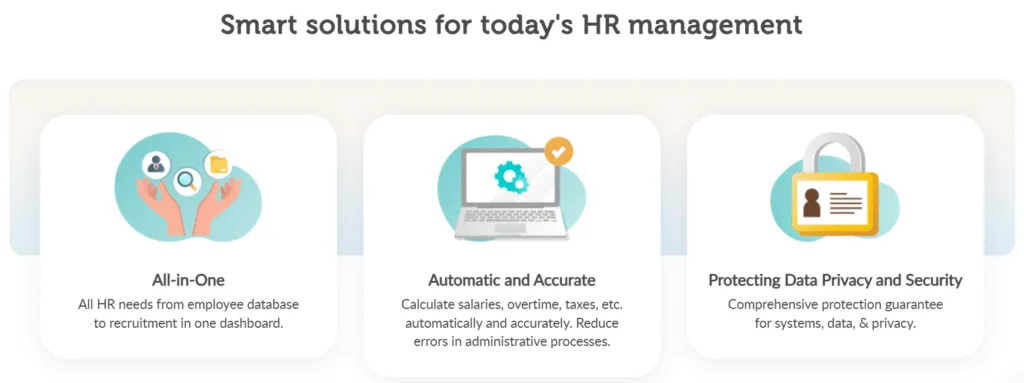
For companies managing remote teams in Indonesia, Gadjian provides a robust in-house HR system. The HRIS cloud software is built specifically around Indonesian compliance and workforce realities. Key capabilities include:
- Localised Employee & Organisation Management—Centralised databases, employee self-service access, multi-company management, and flexible organisational structure mapping allow global HQ to maintain visibility across distributed Indonesian teams.
- Compliant Salary Structures & Grading Frameworks—Design and manage salary scales aligned with Indonesian wage regulations.
- End-to-End Payroll Automation—Automated payroll calculations, overtime, deductions, tax computations, and BPJS contributions.
- Remote Attendance, Leave & Shift Management—Track shifts, approve overtime, manage leave balances seamlessly across regions.
- HR Analytics & Performance Visibility—Turn workforce data into strategic insight to strengthen performance management.
Ready to streamline your remote HR operations in Indonesia? Request a Gadjian demo today and see how compliance meets productivity.
Professional HR Outsourcing
Some international companies prefer not to manage day-to-day HR administration internally. This is where Pegawe strengthens the expansion model.
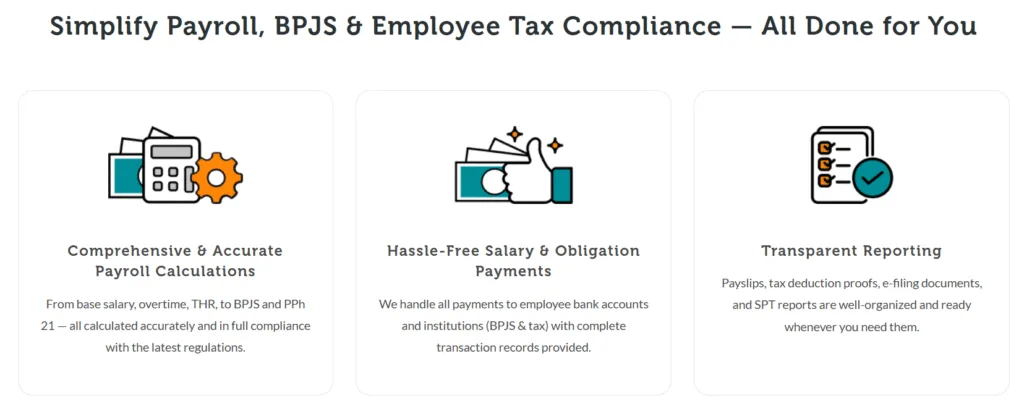
As an Indonesian HR outsourcing partner, Pegawe handles payroll execution, statutory filings, HR documentation, and regulatory updates on your behalf. Instead of building an in-house HR function from scratch, your organisation can rely on local expertise while maintaining strategic oversight from headquarters.
Together, Gadjian and Pegawe create a structured expansion architecture:
- Compliant local HR system
- Administrative execution handled domestically
- Strategic direction retained globally
Focus on growing your business, not HR compliance. Contact Pegawe now and start scaling confidently in Indonesia.
Why Acting Now Matters
Managing remote teams effectively is not about improvisation—it’s about building the right infrastructure before complexity becomes risk. In Indonesia, structure is not bureaucracy—it is protection against friction.
Take the first step today. Whether building an in-house HR system or outsourcing, Gadjian and Pegawe provide smart, compliant solutions for managing remote teams in Indonesia.