
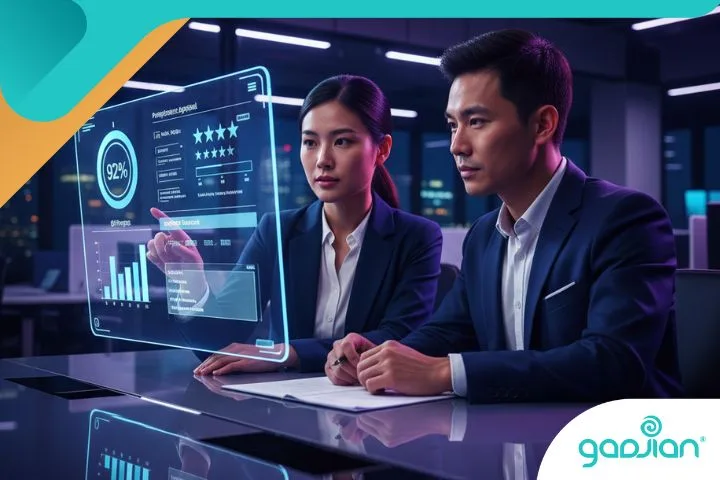
Your best employee just finished their performance review—and they’re frustrated. The feedback feels outdated. Promotion decisions came too late, and there’s no clear direction on what actually matters now. This is the flaw of traditional reviews—and exactly the gap AI in performance management is built to close, before disengagement quietly turns into attrition.
Instead of waiting a full year to evaluate performance, AI in performance management enables continuous feedback, real-time insights, and data-driven development decisions throughout the year. For foreign investors and business leaders expanding into Indonesia, this isn’t just an HR upgrade. It’s a competitive advantage that improves retention, strengthens engagement, and keeps teams aligned as the business scales.
In this guide, we’ll break down how AI-powered performance management solutions work, why they matter in the Indonesian context, and how you can implement them using an HRIS platform.
The Annual Review Is Dead—Here’s Why You Should Celebrate

Let’s be honest: traditional annual performance reviews are broken. Research shows that 95% of business managers are dissatisfied with their current performance review systems, citing inaccurate information, delayed feedback, and performance bottlenecks.
Here’s the problem with the annual review cycle.
It’s too infrequent. By the time performance is reviewed in December, you’re often discussing work from January. Employees have either internalized months of feedback—or gone without any feedback at all.
It’s subjective. Managers rely on memory, gut feeling, and bias rather than data. One manager rates “collaboration” generously, another is far more critical. Same employee, completely different outcome.
It’s disconnected from business reality. Market conditions shift monthly. Project priorities change. Skills gaps emerge quickly. Yet performance frameworks remain static until the next cycle.
It kills engagement. Gallup research shows employees who receive daily feedback are three times more engaged than those who receive feedback once a year. Annual reviews simply don’t keep up.
It’s administratively brutal. HR teams spend weeks collecting data, compiling reviews, scheduling meetings, and managing feedback logistics—time that could be spent on actual development.
AI-driven performance management replaces this with continuous, data-backed feedback. Employees gain real-time clarity on their impact, managers spend less time on administration and more on coaching, and organizations make smarter talent decisions through continuous performance feedback systems.
Also read: Indonesia Labor Law: Key Rules for Foreign Business
From Annual Reviews to Continuous Insight

AI in performance management works through three interconnected capabilities.
Real-Time Data Collection and Analysis
AI systems automatically collect performance data from multiple sources—project management tools, collaboration platforms, attendance records, peer and manager feedback, goal progress, and skill assessments—without adding manual work for employees or HR. The data flows continuously, not just at review time.
Once collected, AI analyzes it in real time, uncovering patterns humans often miss. For example, it may reveal that an employee consistently performs best in collaborative projects or delivers stronger results when mentoring junior staff. These insights enable more personalized feedback and development decisions.
Continuous Feedback and Coaching
Instead of waiting for annual reviews, AI performance management platforms support feedback throughout the year, triggered by key events or regular check-ins. Some systems even generate draft feedback based on performance data, giving managers a solid starting point they can refine with context and judgment.
This mirrors how people actually learn and improve. Real-time feedback sharpens expectations, strengthens accountability, and turns performance management into an ongoing coaching process—not a once-a-year evaluation.
Bias Detection and Reduction
Even well-intentioned managers carry unconscious biases related to gender, age, personality, or background. AI in performance management helps counter this by analyzing input from multiple sources, weighing evidence consistently, and flagging potentially biased language or patterns.
Research shows AI-powered performance reviews can reduce bias in evaluations by around 30% (McKinsey), with some studies reporting reductions of up to 50% (Deloitte, IBM, Harvard Business Review). The result is fairer, more defensible assessments and greater trust across the organization.
Also read: Income Tax in Indonesia for Foreign Businesses
Why Companies Adopt AI Performance Management
The shift toward AI performance management systems isn’t theoretical. It’s already happening at scale, and the data makes the momentum hard to ignore.
Adoption is widespread. More than 52% of people managers already use AI tools in their daily work, while 59% rely on AI to improve feedback and evaluation processes. At the organizational level, 58% of companies globally are using AI for performance management, and 65% of HR professionals believe AI significantly improves efficiency in performance management.
The results are dramatic. Organizations deploying AI-powered performance management report a 71% increase in employee engagement and a 50% improvement in goal achievement rates (Deloitte, 2023). Bias in assessments drops by 25–33% (PwC, Gartner), while companies see a 25% reduction in time spent on evaluations (IBM) and a 22% improvement in employee productivity through AI-driven performance tracking.
Market growth reflects these outcomes. The global performance management software market is projected to expand from $3.4 billion in 2020 to $5.6 billion by 2025, fueled largely by AI adoption. Unlike traditional HR software, this growth is driven by clear ROI—less administrative burden and better, faster decisions that directly impact retention, engagement, and performance.
Top-performing organizations are already ahead of the curve. Companies like Google, Microsoft, and Salesforce have embedded AI-driven performance management into their talent strategies, treating continuous, data-backed performance insight as a competitive advantage in tight labor markets.
For foreign investors entering Indonesia, this trend matters. Local companies closely observe global best practices. Adopting AI performance management early positions your organization as a modern, data-driven employer—exactly the signal top talent looks for in an increasingly competitive market.
Also read: How to Calculate Bonus Tax with New Rates
Why AI Performance Management Matters Specifically for Indonesia

Indonesia’s labor market is highly competitive and rapidly digitizing, creating a unique opportunity for companies that adopt AI in performance management early. While many local organizations still rely on annual reviews, foreign investors and growth-oriented businesses can leapfrog straight into continuous, AI-driven performance management—instantly differentiating their employer brand.
This matters because Indonesia’s talent pool is young, ambitious, and fast-learning, but the supporting development infrastructure is still evolving. By implementing AI employee performance analytics, companies can create personalized development paths that help high performers grow faster, see clearer progress, and feel invested in—key factors that directly influence retention.
Retention itself is a growing risk. AI-powered performance management surfaces early disengagement signals long before frustration turns into resignation. This allows managers to intervene with coaching, role adjustments, or development support at the right moment.
AI also levels the playing field. Large Indonesian conglomerates benefit from mature HR infrastructure, while startups and mid-sized companies often don’t. AI performance management closes that gap, delivering enterprise-level capability without heavy overhead or complex organizational layers.
Finally, it sends a powerful signal of professionalism. International investors and globally mobile talent expect modern, data-driven HR practices. Implementing AI-driven performance systems shows that your organization operates by global standards—building confidence, credibility, and trust across both local and international teams.
Also read: Employment Types in Indonesia: Contracts and Regulations
How AI in Performance Management Actually Works
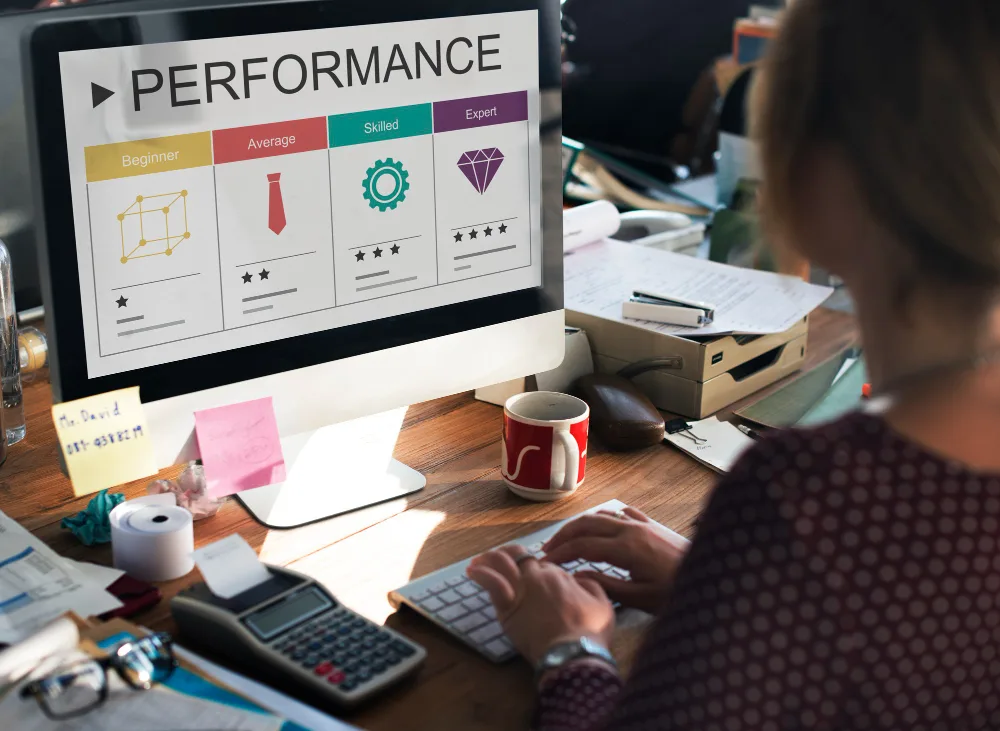
In practice, implementing AI performance management isn’t about replacing managers. It’s about giving them continuous, usable insight. Here’s what the process typically looks like.
Step 1: Define Success Metrics and Goals
Everything starts with clarity. Companies first define what success looks like—at the organizational level and for each role. These goals become the baseline the AI system tracks throughout the year.
Unlike traditional goal-setting that gets revisited once a year, AI systems monitor progress continuously, flagging when someone drifts off track and highlighting blockers that need managerial attention.
Step 2: Enable Real-Time Data Collection
AI in performance management relies on live data: project delivery, peer and manager feedback, skill assessments, attendance, and collaboration patterns. Modern platforms integrate directly with tools you already use—project management systems, communication apps, and HR software—so data flows automatically without adding admin work.
Step 3: Deploy Continuous Feedback Loops
Annual reviews are replaced by regular feedback—weekly check-ins, monthly one-on-ones, or feedback triggered by completed projects. AI supports managers by summarizing performance data and suggesting coaching points based on emerging patterns.
The result is immediacy. Employees know where they stand now, not months later, while managers shift their time from paperwork to coaching.
Step 4: Turn Insights Into Development Planning
AI-driven performance management goes beyond measurement. It identifies development needs and recommends personalized growth paths. If the system sees someone thriving in collaboration but struggling with independent ownership, it may suggest mentorship, structured projects, or targeted training.
This makes development more effective and more engaging.
Step 5: Monitor Trends and Adjust Strategically
Over time, AI tracks patterns across individuals, teams, and the organization. Leaders can spot engagement issues, critical skill gaps, management styles that drive performance, and high performers who may be at risk of disengaging.
These insights power data-driven performance management, informing smarter decisions around compensation, internal mobility, training investment, and organizational design.
Also read: The Benefits of Using Payroll Outsourcing Services in Indonesia
Building Your AI-Powered Performance Management Strategy
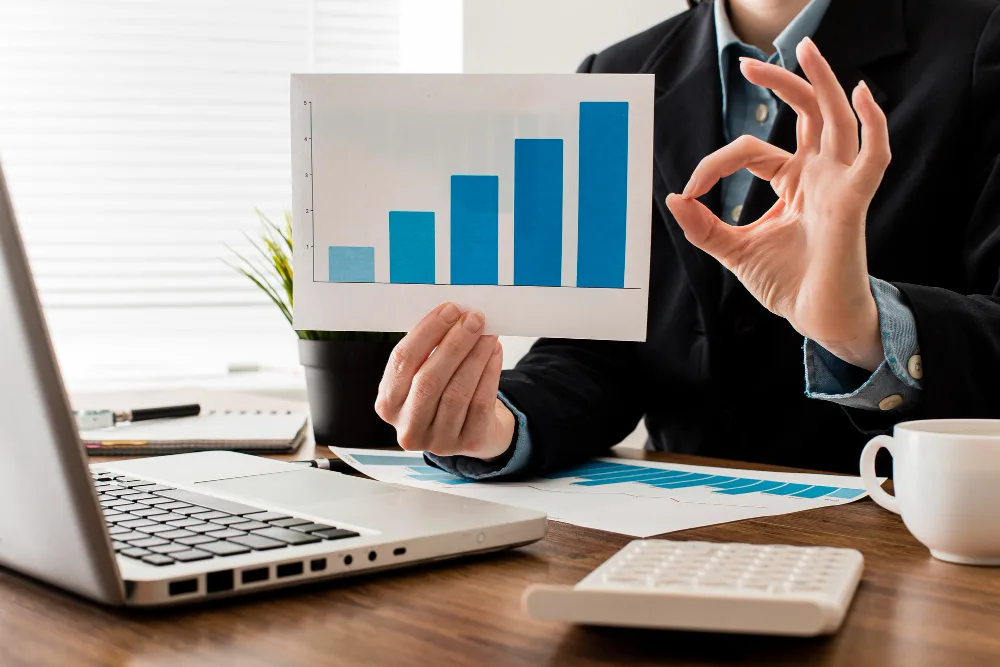
Before implementing AI performance management, step back and answer a few strategic questions. This isn’t about software first—it’s about clarity.
Start with success. What does high performance actually mean for your organization? You should clearly define growth targets, engagement levels, retention outcomes, and skill development priorities. These become the KPIs that guide how your AI performance management system evaluates progress throughout the year.
Next, identify where performance matters most. Not every role needs optimization at once. Focus your initial implementation on high-impact positions—roles that drive revenue, innovation, or operational stability. Once the system proves value, scaling across the organization becomes far easier.
Then look at your data. Most companies already have what they need: payroll history, attendance patterns, project outputs, collaboration data, and feedback from managers or peers. AI performance management works best when it connects these existing signals into one coherent performance narrative.
Be honest about your current people challenges. Are you struggling with turnover, disengagement, stalled career growth, or promotion bottlenecks? AI performance management doesn’t solve everything automatically—but it gives you visibility into where problems start and when intervention actually matters.
Finally, set realistic expectations on timing. Implementing AI-powered performance management isn’t instant. Most organizations need two to three months to define KPIs, connect data sources, establish baselines, and train managers to use insights effectively. That upfront discipline is what determines whether AI becomes a strategic advantage—or just another dashboard.
Also read: Recruitment of Foreign Workers Regulation Indonesia: A Complete Guide
Start Your AI-Driven Performance Management with Gadjian
If you’re ready to move beyond annual reviews, use Gadjian to implement AI performance management directly within your everyday HR operations, without adding extra layers.
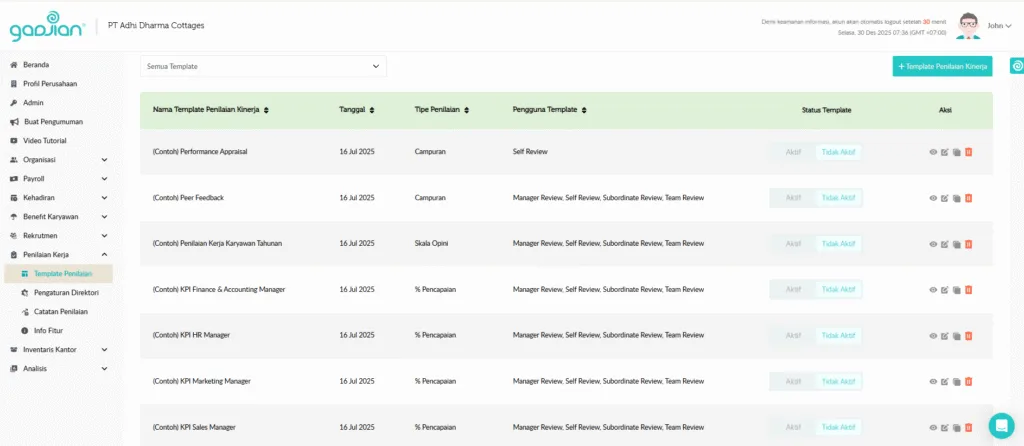
Employee Performance Management Software
Gadjian enables continuous performance evaluation through structured, customizable review forms aligned with roles, KPIs, and organizational goals. Performance data is documented centrally, creating a reliable, long-term performance record instead of one-off assessments.
Managers can define KPIs at the individual, team, or department level and monitor progress throughout the review period. This makes feedback timely, relevant, and actionable—allowing early intervention instead of year-end surprises. Performance reviews are conducted directly in the system and accessible anytime through cloud-based access, supporting distributed and flexible teams.
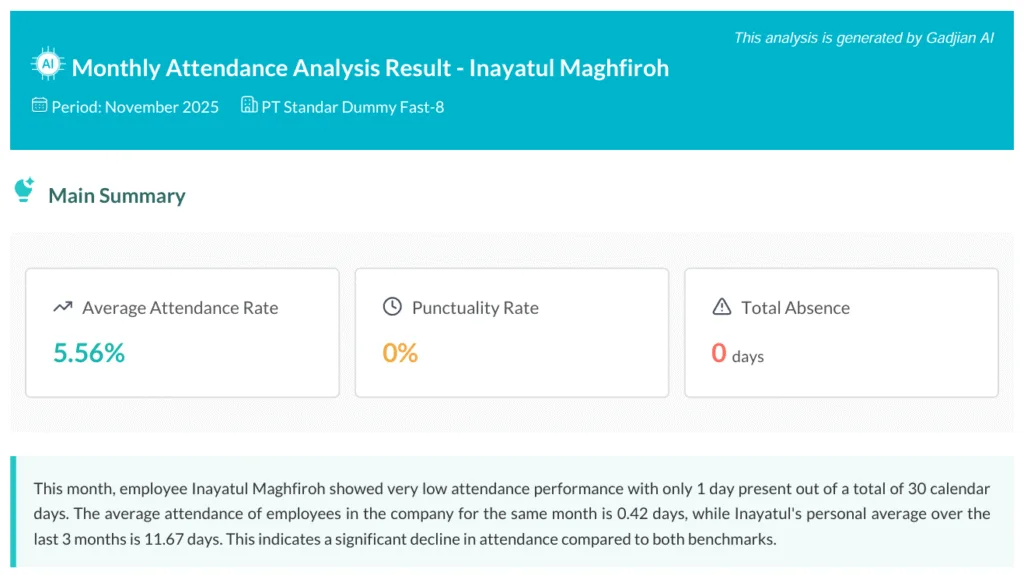
Monthly intelligence, not annual surprises
Instead of waiting for year-end reviews, companies receive monthly performance insights, including commitment signals, emerging trends, and practical recommendations that support coaching and development decisions.
Real-time HR Dashboard Analytics
To support AI-driven decision-making, Gadjian complements performance reviews with a real-time HR analytics dashboard. Workforce metrics such as attendance patterns, engagement signals, and organizational composition are visualized automatically—without manual reporting.
AI-assisted analysis highlights trends and anomalies that may signal declining engagement, performance issues, or emerging HR risks. By analyzing patterns across attendance, leave, and performance data, the system supports early identification of potential disengagement. Ready-to-use dashboards and exportable reports make insights immediately usable for management discussions and strategic planning.
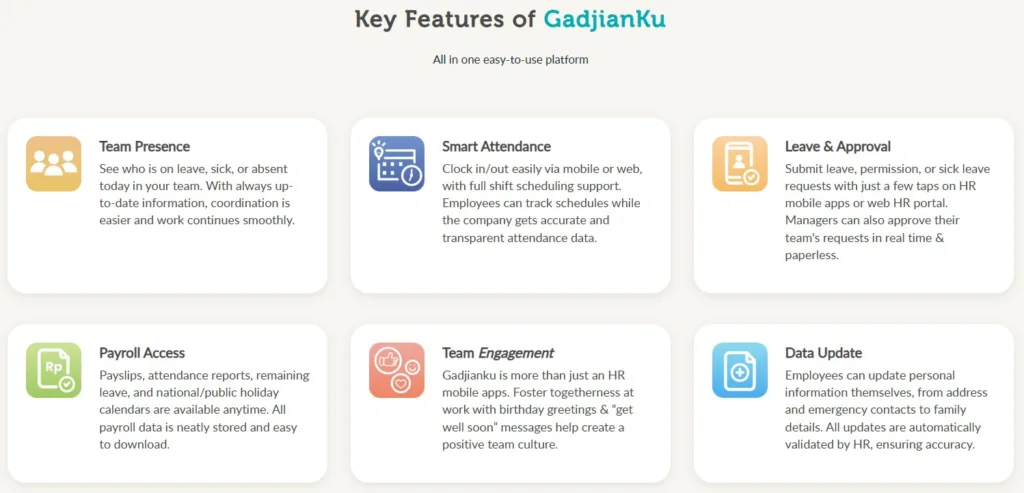
Integrated with Payroll and Core HR Systems
Performance data in Gadjian is not isolated. KPI outcomes flow directly into compensation decisions such as bonuses and salary adjustments, while performance trends inform training priorities and development programs. Employees identified as at risk can be proactively supported through mentorship or career development initiatives.
Because payroll, attendance, leave, and performance live in one ecosystem, performance management drives real business outcomes—not additional administrative workload.
Built for Indonesia’s context
Gadjian aligns AI performance management with Indonesian labor regulations, compensation norms, and local business culture—so insights are practical, compliant, and immediately applicable, not theoretical models borrowed from other markets.
Built for growing companies
AI-powered performance analytics are available for companies with as few as 15 employees, making enterprise-grade insights accessible to startups and SMEs.
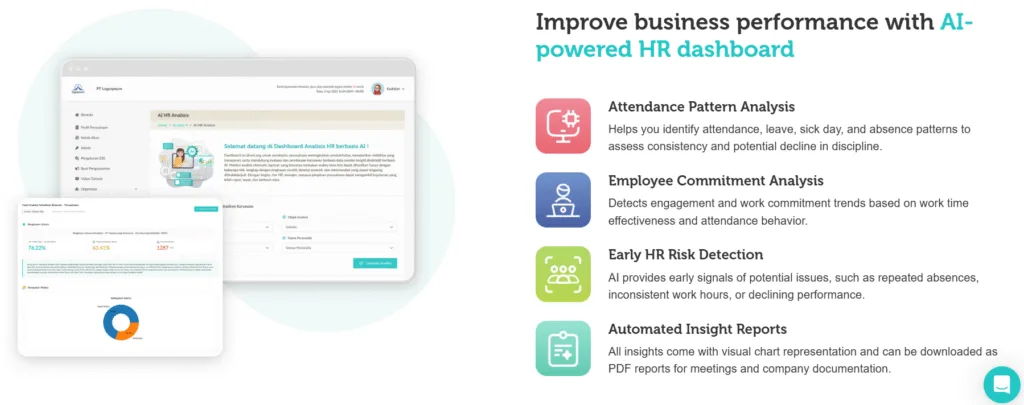
By combining performance management tools with AI-supported HR analytics, Gadjian helps organizations replace static annual reviews with continuous, evidence-based insights. It also helps reduce administrative burden, improve fairness in evaluations, and connect performance outcomes directly to retention, development, and compensation decisions.
For foreign investors and business leaders entering Indonesia, adopting AI in performance management isn’t about keeping up—it’s about staying ahead.
Request a demo of Gadjian’s Performance Review, KPI Tracking, and AI Analytics Dashboard, and start turning performance data into real business impact—faster, fairer, and with less manual effort.